For My Shield This Day I Call a Mighty Power

For My Shield This Day I Call a Mighty Power

A Sermon for Pilgrim Congregational Church, UCC, Lexington

Rev. Reebee Kavich Girash

March 15, 2026

(video)

SCRIPTURE READING

Psalm 23 Common English Bible

The Lord is my shepherd.
    I lack nothing.

God lets me rest in grassy meadows;
    God leads me to restful waters;

        God keeps me alive.
God guides me in proper paths
    for the sake of God’s good name.

Even when I walk through the darkest valley,
    I fear no danger because you are with me.
Your rod and your staff—
    they protect me.

You set a table for me
    right in front of my enemies.
You bathe my head in oil;
    my cup is so full it spills over!

Yes, goodness and faithful love
    will pursue me all the days of my life,
    and I will live in the Lord’s house
    as long as I live.

Mrs. O’Keefe can sense the danger Meg and Calvin and Charles Wallace are about to face. She draws from her ancestors and speaks:

All Heaven with its power,

And the sun with its brightness, 

And the snow with its whiteness,

And the fire with all the strength it hath…

All these I place
by God’s help and grace
between myself and the powers of darkness….

So begins Madeleine L’Engle’s novel A Swiftly Tilting Planet.  Our heroes take this rune, this prayer, this song with them as they face epic conflict.  As they travel in and out of generations and face and overcome what could be the end of the world, these words become their shield.  

And since reading this book in childhood, when I have faced danger or needed courage, I have called on this prayer: I call all heaven with its power… to stand against all wrong, to bridge the gap, to protect me, to be my shield.  To protect those I love, to be a shield for my neighbors when danger comes.  Sometimes prayer has to be fierce.    

But it was this year that I realized the rune at the center of the plot long predated this novel.

Madeleine L’Engle was a novelist and poet – and an Episcopalian who drew this prayer right from St. Patrick.  

Patrick, whose words inspired our first hymn today.  Patrick of Ireland, whose teachings moved Columba to Iona, whose words and ideas are heard down the centuries in Celtic lands.

And therein lies an invitation, from Celtic Christian tradition, to all of us.  

“For my shield this day

A mighty power:

The Holy Trinity!

Affirming Threeness,

Confessing Oneness

In the making of all

Through love

In the west of Scotland, Celtic Christians were known for praying at every occasion – from getting up in the morning, stoking the fire, to the birth of a child to moments of danger.  Every moment was steeped in prayer. There was a sense that prayers protect us and connect us to the power of God.  Ancient runes invoke God’s presence to stand in the gap.  And there were moments and years and centuries of danger, there were moments and years and centuries of suffering.  So, sometimes prayer had to be fierce.

Over the centuries, this tradition of prayer and poetry became prayers of resistance.  “It was song [and prayer] that sustained them in their times of loss, suffering, and exile.”

There is a beautiful collection of the prayers of the Scottish Hebrides, the Carmina Gadelica – Songs of the Gaels – gathered in the 19th century, when it seemed this oral tradition would be lost if not written down.  Because they were written down, we can lift up prayers like this:

God to enfold me, 

God to surround me, 

God in my speaking,

God in my thinking,

God in my sleeping,

God in my waking,

God in my watching, 

God in my hoping.

God in my life, 

God in my lips, 

God in my hands

God in my heart.  

Esther de Waal writes of praying such ancient words today: “I find that while it is a desperate entreaty, a cry for help, it also carries a great feeling of confidence that the powers I invoke will come to my aid.”

From the prayers of Patrick to the songs of the Gaels, we have a treasury of strong Celtic prayer.  Runes of protection.  

It was this week that I realized Psalm 23, that beautiful chapter so many of us know by heart, can also be a rune of protection in times of trouble.  Psalm 23 can be a fierce prayer.

There are moments when the challenges we encounter are almost cosmic in scope.  We face cataclysmic disruptions in the world – and we face our own personal strife. 

These are moments when scripture, and the prayers of our ancestors, can become tangible cloaks and shields.  

The Lord is my shepherd.

As Paul says, moments when we put on the whole armor of God. 

When we don’t know where to go, 

We invoke God’s guidance.

As the Psalm says:

God lets me rest in grassy meadows;
    God leads me to restful waters;

        God keeps me alive.
God guides me in proper paths
    for the sake of God’s good name. (Psalm 23 CEB)

And as Patrick said:

“This day I call to me: God’s strength to direct me, God’s power to sustain me, God’s wisdom to guide me, God’s vision to light me, God’s ear to my hearing, God’s word to my speaking….”

When we face adversaries – and that could be human opponents, or illness, or a world that seems to have gone off the rails – God is next to us.

As the Psalm says:

Even when I walk through the darkest valley,
    I fear no danger because you are with me.
Your rod and your staff—
    they protect me. (Psalm 23 CEB)

And as Patrick prayed:

“God’s hand to uphold me, God’s pathway before me, God’s shield to protect me, God’s legions to save me…”

When we cannot find hope, there is God’s love, no English translation can contain the kind of love the Psalmist spoke of, chesed in Hebrew:

Yes, goodness and faithful love
    will pursue me all the days of my life,
    and I will live in the Lord’s house
    as long as I live.

And as Patrick proclaimed:

“Christ beside me, Christ before me, Christ behind me, Christ within me….”

The strength that is beyond strength, the courage that is beyond courage, the power that is beyond power, the guidance that is beyond guidance.  God’s chesed.  God’s unfailing and steadfast and fierce love.

“All these I place
by God’s help and grace
between myself and the powers of darkness…”  

The Celtic Christian tradition of hundreds of years ago was an oral tradition.  The prayers, songs, poems, runes were memorized and passed down like precious, sometimes secret gifts.  We basically don’t do that these days.  Rote memorization is out of vogue.  But most of us know Psalm 23 by heart.  

So if you know these words by heart, I wonder if you might try to remember them a different way today.  Not just as a memory or a statement of faith.  But as a power, as a shield.  Might it be, sometimes, that remembering Psalm 23 might become part of your courage?  A shield, a cloak of protection?

I chose to print a less familiar version of the psalm today, with the hope that its symbols and promises would feel fresh.  But now I want to read this Psalm aloud to you again, using the version most familiar to English speakers, but reading it to you in the form of a fierce rune of protection and a declaration of courage.

1 The LORD is my shepherd;
I shall not want.
2 He maketh me to lie down in green pastures:
he leadeth me beside the still waters.
3 He restoreth my soul:
he leadeth me in the paths of righteousness for his name’s sake.
4 Even though

Even though,

Even though

 I walk through the valley of the shadow of death,


I will fear no evil: for thou art with me; thy rod and thy staff they comfort me.

 5 Thou preparest a table before me in the presence of mine enemies: thou anointest my head with oil; my cup runneth over. 

6 Surely goodness and mercy shall follow me all the days of my life:

and I will dwell in the house of the LORD for ever. 

Amen.

Postscript on enemies in Psalm 23: There’s a major question that I’m jumping over in my reflections today.  The Psalmist frames their struggle against enemies.  How do we deal with that language?  I commend to your attention Dietrich Bonhoeffer’s reflection on Enemies in Psalms: The Prayer Book of the Bible.  (discussed https://www.christiancentury.org/features/praying-imprecatory-psalms-bonhoeffer,  and quoted at length in https://renovare.org/articles/the-enemies ) .  I also commend to your attention W. David O. Taylor’s Open and Unafraid: The Psalms as a Guide to Life, Chapter 9 – on Enemies: “It is important that we be clear about the purpose of enemy language in the psalms. Its purpose is to remind us that the violent, sinful ways of human beings – including our own violent, sinful ways – need to be named so that God can step in and do something about it…not a license to do violence to others…[it] is a matter of honestly naming our experience.”  Taylor goes on to offer Christians the framing of Matthew 5:43-45 and Luke 23:34 to hold in parallel with these passages from the Psalms. 

So You’re Shopping for a Study Bible

It’s December, and someone on your Christmas List wants a Study Bible.  Or, you want to put a Study Bible on your wishlist.  How should you choose?

If you’re reading this post, I assume the following about you and your recipient:

  • You’re part of a progressive Christian tradition.  You’re mainline Protestant – UCC or otherwise.
  • You’re looking for something scholarly.  Your use cases include following along with the texts from Sunday’s church service, devotional study of the Bible, and an intellectual curiosity about historical context, authorship, and form.  
  • You’re also looking for a study Bible with recent scholarship. 
  • You’re looking for something easy to use.  You’re also looking for articles, maps, and footnotes.
  • You want your Biblical interpretation to support being a good neighbor.
  • You’re looking for a physical Bible, rather than an app or an online-only resource.

-The New Oxford Annotated Bible with Apocrypha: New Revised Standard Version, 5th Edition. Also excellent: The Harper Collins Study Bible, NRSV. Why? The NRSV was released in 1989 and remains the standard for most mainline Protestant churches. It’s in the pews at Pilgrim Church, for example. My Oxford Annotated NRSV is still my go to Bible – and 30 years later it turns out the paperback binding was not the right choice. Splurge on the hardcover! If you’re really going for the very latest scholarly translation, you want the NRSVUE – The New Revised Standard Version Updated Edition. The NRSVUE was just released which means most Study Bibles do not include the NRSVUE. There is a Lutheran Study Bible, Second Edition (New Revised Standard Version Updated Edition) from 2025. Looking for one for a teen? Generally, youth study Bibles from the past 10 years that rely on the NRSV and are published by SparkHouse or Cokesbury are worthwhile choices.

The Jewish Annotated New Testament edited by Amy-Jill Levine and Marc Zvi Brettler.  Why? The scholarship in this edition helps us avoid antisemitism.

The Inclusive Bible, The First Egalitarian Translation by Priests for Equality. Why?  The scholarship is good, the language is poetic. However, this is not a study Bible, so it’s a second volume for your shelf.

These are my recommendations!

+Pastor Reebee

Pastoral Letter on Freedom

Freedom of Speech, Freedom of Religion, Freedom of Conscience, Freedom of the Pulpit

In this time of profound and swift cultural change, we are buffeted by strong winds.  While there are many dramatic headlines of late, I have been watching some related to the freedoms that are central to the US, and pondering how these events relate to my pastoral role and to our shared life in this faith community.

A few weeks ago the General Counsel of the UCC offered concern that houses of worship receiving federal grants for building security may be required to align with the principles of the current federal administration.  (http://ucc.org/federal-grants-local-churches-must-review-and-understand-requirements/ ) While Pilgrim Church has not applied for such security grants, this letter from the national UCC stunned me. The broader risk pointed to by this memo is that of limiting the freedom of a local congregation to discern its beliefs, limiting a local congregation’s freedom to speak based on the faith held by those gathered, and limiting a preacher’s freedom to speak from their individual faith and conviction.  As a Congregationalist, reading our General Counsel’s advice, I grew concerned about freedom of religion.   As a pastor in a tradition that affirms the freedom of the pulpit, I wondered what the next headline would say.

A story unfolded over the last two weeks that might feel totally unrelated to church business.  It began with an awful event – and let me be clear that I condemn violence against anyone and mourn for all deaths from violence. That terrible and violent event quickly became the rationale for limiting free speech, including the cancellation of a program because government officials did not approve of the host’s speech. (After major public pushback, today’s headline is that this late night program will go back on the national network but not all local affiliates.) While TV and ministry don’t generally overlap, these two matters feel related to me.  Freedom of speech and freedom of religion are enshrined in the first amendment of the US Constitution. 

In my years at Pilgrim this has been my steadfast practice: to never be partisan in my pastoral role, meaning that I never endorse candidates for public office and I respect that members of our community may vote differently from one another, according to our conscience. I hold to that principle even since the Johnson amendment has been set aside. I also believe deeply in speaking kindly whenever it is possible, and it’s always possible (to paraphrase the Dalai Lama).  But as a pastor and preacher, I balance a commitment to non-partisanship and kindness with the principle of Freedom of the Pulpit. Drawing on freedom of the pulpit as described in my call agreement and in the principles of the United Church of Christ, in my sermons and my role, I prioritize regularly speaking on matters of the common good.  Matters that are relevant to our lives beyond the walls of the congregation. Matters of the polis.  Matters of politics.  I speak to the church, not on behalf of the church, and not every church member agrees with me all the time.  In the wisdom of an ancestor, I seek to comfort the afflicted and afflict the comfortable.

I do this in the lineage of the greatest preacher and teacher that I know, whose preaching and teaching I aspire most to follow, preacher Jesus.  Whose pulpit was the mount and the plain and the synagogue and the city gate, whose congregation included fellow Jews as well as Gentiles, the rich and poor, the hungry and well fed, whose sermons declared the radical notion that in the kin-dom of God no one starves. Whose sermons drew from the teachings of his ancestors in faith and whose sermons provoked the powers that were. Whose sermons, heard in our time, provoke the powers that be.  It turns out that Jesus spoke on the common good.  On matters of the polis.  Jesus’ preaching was at times political.  He is my model. 

I have, in my pastoral role over many years, preached politically.  I have lifted up issues of great importance – homelessness and hunger, reproductive justice, climate change, gun violence.  I have called upon communities to change oppressive systems.  I have shown up in my role to call upon local and national elected officials to act with wisdom and compassion and I have critiqued leaders of multiple parties when their actions have shown primary allegiance to power and profit.  I will continue to do so, even in moments when freedom seems more tenuous.

I’m a Congregationalist.  I’m a pastor in a tradition that affirms the freedom of the pulpit. I live in a country that treasures freedom of speech and freedom of religion. So I will continue speaking from my conscience, speaking my truth to the powers that be, and working for the common good.  I pray for freedom: freedom of religion, freedom of speech, freedom of assembly, freedom of the pulpit.  Some of those freedoms are civic, and some of those freedoms are religious.  I pray also that wisdom and compassion might guide our speech and actions, now and always.

Pastor Reebee

Postscript:
It is also crucial in this moment to reflect on violence and non-violence.  I commend two recent pieces in the magazine Christian Century – the first by Lilia Ellis, the second by the Editors; they speak very clearly on this subject.

We Are Bearing Witness

On a warm day in early August, I park my car in an unused lot between stores and office buildings.  Dozens of folks are walking toward some trees next to the sidewalk carrying water bottles, and sun hats, and signs – I’ve found the right place.  I pull on my clergy collar and rainbow stole and carry my Love Your Neighbor sign.  Within a few minutes after, there are hundreds of us, our attention turned toward a small office building.  We are Bearing Witness @ ICE.

An organizer comes to the mic to welcome us.  “We are here to support the dignity and rights of every immigrant.” He shares the story of this moment in this place. Inside the ICE facility, detainees are held in converted conference rooms, with no beds, no natural light, no clocks. Immigrants sleep on concrete floors with a toilet in the middle of a room. There is no soap. Sanitary products are not available for those menstruating. This is cruel and unusual punishment. Lawyers are not allowed to see clients being held here, and detainees are not able to contact their families. Due process is not available.  We are within sight of the Burlington Mall.

The gathered crowd walks slowly down the sidewalk.  Just before we begin to walk, our conveners ask us three questions. Are you here because you support immigrants?  We cry, yes.  Do you support the Constitution?  We cry, yes. Are you committed to nonviolent witness?  We cry, yes.  We walk or wheel or use rollators toward the main road chatting and holding banners and flags.

One Friday we gather with Blanca.  She has been called to an appointment at 7:45am and no one knows whether she will come back out of the building.  Hundreds of us sing and pray with her.  The wind blows through the trees and I find myself praying that the Holy Spirit’s wisdom and love (Hebrew: ruah – the breath of God) will blow through this innocuous-looking parking lot and move through the hearts of everyone in the ICE building.   We don’t know why and we don’t know whether our presence helped, but Blanca is released – for now.

Every time I attend, I see people I know from Lexington, Arlington, Burlington. Last week that included Pilgrim folks.

There is power in these gatherings.  Immigrants called into appointments know their neighbors care for them.  The people who work in that facility are asked by their neighbors to follow legal and ethical standards and treat every human being with dignity and due process.  For the foreseeable future, I’ll be there, most Wednesdays, 11-1.  Bearing Witness.  Would you join us?  Feel free to email me if you’d like to coordinate.

Pastor Reebee

Blessings of the West Highland Way

A Reflection for Pilgrim Congregational Church, UCC, Lexington

Rev. Reebee Kavich Girash

August 17, 2025

Psalm 128:1-2

Happy is everyone who fears the Lord,

    who walks in God’s ways.

You shall eat the fruit of the labor of your hands;

    you shall be happy, and it shall go well with you.

Ephesians 5:1-2

1 Therefore be imitators of God, as beloved children, 2 and walk in love, as Christ loved us and gave himself up for us, a fragrant offering and sacrifice to God.

Bless to me O God

The earth beneath my feet.

Bless to me O God

The path on which I go.

Bless to me O God

The people whom I meet.

From: Celtic Prayer from Iona, compiled by J Philip Newell

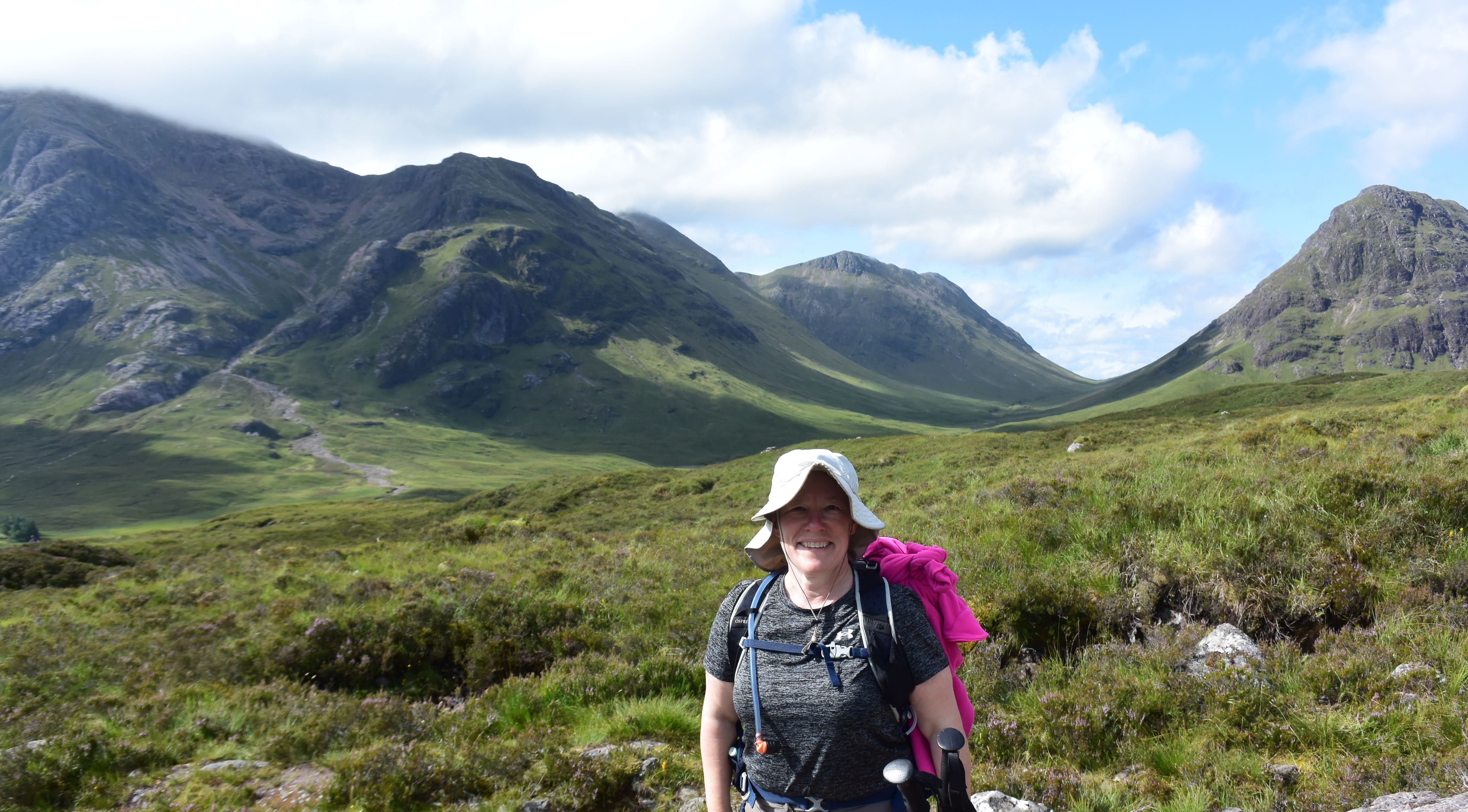
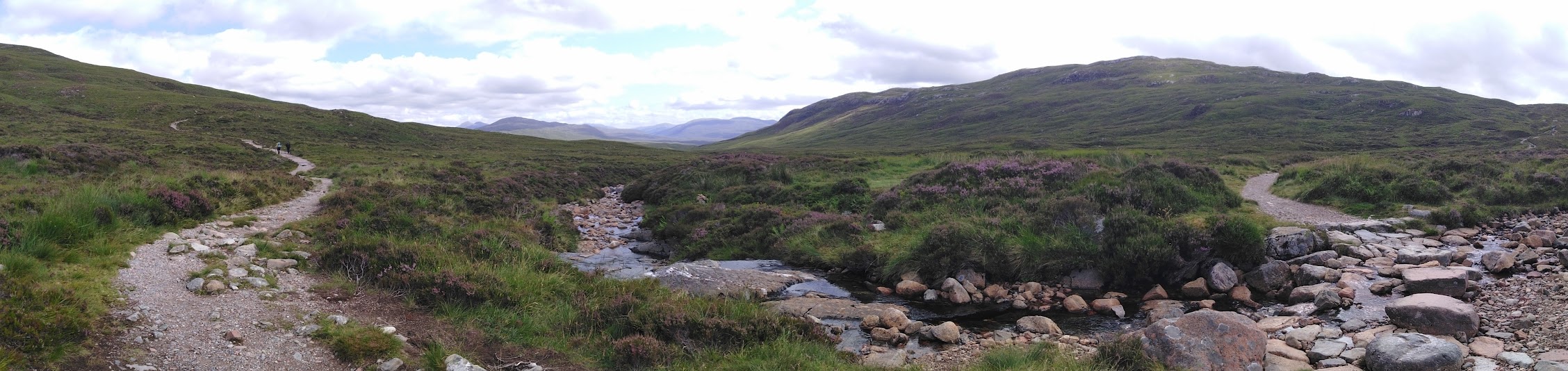
I walked the West Highland Way as a part of my sabbatical.  It’s a 96 mile hike that runs from Milngavie (outside Glasgow, Scotland) to Fort William – though my phone said 106 miles when I completed the path on my eighth day, and so I’m claiming the “century.”  It was at the same time one of the hardest and one of the easiest things I’ve ever done.  The hard parts were obvious: hiking on my own an average of twelve miles a day, up and down big hills, over gravel and tree roots, along drovers’ roads and through swarms of Scottish midges.  But all this made it easy, too: my sole focus for those eight days was on walking, which I did as a pilgrimage journey of sorts.  In fact, for the first part of my sabbatical, my work was to walk in preparation for this journey, and to spend time with family and friends.  Easy.  On the West Highland Way, my focus was singular. My schedule, my pace, my snack choices, my thoughts.  Long days?  Yes.  But easy ones, too.  


My trail name is Mountain Turtle.  I planned a reasonable pace of eight days, starting early most days and just plodding along at my own speed, inn to inn.  However – though I walked on my own, I was rarely alone on the Way.  I kept meeting people whose pace was very much like mine.  The thing about a multi-day walk like this one is that you come to have trail buddies.  I’d set off early in the morning and walk an hour with the retired motorcycle enthusiast from England.  And then a trio of women from Seattle would catch up and we shared stories.  Then I walked alongside a couple from Glasgow and their dog.  And the Canadian lawyer living in London who hill walks every chance she gets.  And that tall couple from California.  And the special needs teacher from Czechia, who re-sets his spirits through long hikes.  Most of the time we knew nothing about our lives “off the trail” but we could still be trail buddies.  At stops and breakfasts, we asked after each other.  We took care of each other. We shared Compeed (excellent for blisters), snacks, duct tape (excellent for emergency tent pole repairs) and kind words.  

And that’s actually what I want to highlight to you this morning.  The kind words.  The blessings of the West Highland Way that I think can extend to all of us, whether or not we’re hill walking through the Scottish Highlands. 

What I’m saying here is that if a random group of strangers can love each other – we can all love our neighbors.  Walk in Christ’s way.

Offering blessings and kind words became part of my spiritual practice on this eight day journey.  I was very intentional about this as a daily habit.  When I was walking by myself, particularly in the early morning, I prayed for all my folks back home.  And when I walked alongside someone – or was passed by another walker – I picked a word or idea each day to offer as a blessing, silently or aloud, for my fellow travelers.  It was a form of prayer.  It was an offering of love. I didn’t say, “hey, I’m praying for you” or “would you like a blessing?”  Honestly I flew under the radar as clergy or even Christian most of the time.  I just offered a little word that was my theme for the day, in some manner subtle or obvious.

The first day the blessing word was excitement. We were all fresh at that point, and eager.  May your walk be exciting – but not too exciting.  

On the second day, which is known as the hardest because it goes over Conic Hill, the blessing word was courage.  Be of good courage I said to many people on the very long switchback up Conic Hill.  Being passed by so many, I had a lot of opportunities to bless.

The third day, which was very very hot and the only day I came close to running out of water, the blessing was Stay Strong!  

The next day, which was so bright and sunny all day, the blessing word was Lively.  Thinking of the Iona prayer, Creator around me, Christ accompanying me, Spirit animating me, I offered that Spirit to sore-footed passersby: keep stepping Lively.

Sunday was day five, and brought me to a sweet Church of Scotland service in Bridge of Orchy.  The gospel for that day was the Good Samaritan. Who was a neighbor?  The one who showed mercy.  So my blessing word was care: Take good care, now.

Monday we walked across Rannoch Moor.  In rain.  No breeze.  Loads of Midges.  A tough day for us.  So the blessing word this day was Hope.  Hope to see you in Kingshouse, our next stop.

Day 7 was just the most beautiful day I’ve ever experienced outside, and I was filled with joy and wanted everyone to feel the same so the blessing that day was joy.  Enjoy your walk.

And then it was Day 8.  The end!  The blessing word was blessing.  Blessings on your journey (the West Highland Way and whatever your future journey may be).

At the very end of the Way, the path brings you through a commercial district lined by shops and pubs.  The cynical part of me thought: that’s so everyone is funneled right into commercialism before we even finish the route.  But actually this turned out to be another great blessing of the Way for me.  Because, a block from the end – just before the statue of the hiker with tired feet – I heard my name called out with joy, and people clapping.  For me!  Some of those same trail buddies who had gotten there faster sat on the sidewalk with their fries and drinks and turned to watch hikers come in those last, hobbling steps of the last, long day.  And our trail friends cheered us, blessing us right over the finish line.  

And this is the blessing we can offer to each other every day, in hiking boots or patent leather heels.  We can bless people for how far they’ve made it today.  Well done.  Look what you did!  Which also translates to, I love you, Neighbor. 

Maybe you want to try this.  Pick a blessing word and notice the people who share your path.  Don’t make a big show of it (I am certain no one who walked beside me on the way knew what I was doing, and that’s never the point of a blessing).  Just bless folks and pray for them – and notice who has made it so far today, and notice and help those who are stuck.  Because we all need trail buddies, every day. 

Amen. 

Nothing is Disposable – a Meditation from Iona

{“capture_mode”:”AutoModule”,”faces”:[]}

A Reflection for Pilgrim Church 

August 3, 2025

Rev. Reebee Kavich Girash

Luke 14: 12-14, as offered by Caro, the Iona Community’ss Warden, during worship at Iona Abbey July 2025

Jesus was eating a meal in the house of one of the leading teachers of the law, and he said to his host, ‘Whenever you give a lunch or a dinner, don’t invite your friends or colleagues or wealthy neighbours.  They might invite you in return and thus repay you.

No, when you have a party, invite those who never get invited out because they are deemed awkward, or different, or unworthy.  And then you will be, and experience, a blessing.  Then, even if they can’t repay, it shouldn’t matter to you, for you will be repaid at the resurrection of God’s people.

(I have just returned from sabbatical. My final week was at Iona Abbey on the island of Iona, Scotland.) 

In the Iona Community, within the walls of this Abbey, nothing is disposable.

In the morning when you make your tea, it’s in a hearty mug which you wash by hand with a microfiber cloth that is color coded for its purpose and reuse.  You dry your mug with another towel that has been used and laundered again and again.  Your tea bags, surely bought with care and fair trade, are composted to continue the cycle. Nothing is disposable here.

In the ruins of the Nunnery on Iona.

In the Abbot’s House where we stay, we press a button to get thirty seconds of water from the shower. We can press as many times as we like, but we are reminded each time: water is life.  Even water is precious here.

In the Abbey Church, there are walls a thousand years old.  In some places the local ferns have taken root within the mortar but they, too, are not taken out or thrown away.  They become as wreaths bringing color to the high stone walls of the chancel.  In the Abbey Church not even a weed is unvalued.

In the Abbey Refectory, nothing is disposable.  Once the locally sourced supper is complete, we tuck our bandana napkins back in our pockets for the next meal. There is no plastic here.  Our apple cores are composted and our leftovers carefully stored for the volunteers’ intimate meal on Friday when the guests have all ferried away again.  In the Abbey, no fruit of the earth is disposable.

When we walk around the island together on sacred Pilgrimage, we go at the slowest one’s pace and thus our hurriedness gives way to noticing.  Around the Abbey, no moment is disposable.  

Here, this week, scraps of paper are cut into squares to receive sacred, tender prayer requests: the names of those in need of healing are read aloud by candlelight in the Abbey Church connecting all of us to all of you for whom we pray.  In Community, scraps become offerings and even paper is not disposable. 

In the Abbey Cloister, fallen walls have become a sacred site, not swept away for the new.  

In the Abbey Community, when one of us walks in a near tumble and speaks with staggered, marbled words, we pause, and wait, and listen until we hear.  Because in the community, nothing is disposable.  

Here in the Abbey we learn, imagine and pray that in the Kindom of God, nothing and no one is disposable.

Amen.

Pastoral Letter before the 2024 Election

Grace and Peace in these autumn days.  

You may recall that I offered a letter similar to this one in the fall of 2020.  It seems appropriate once again to reflect on my pastoral approach to  politics and elections, and our life together as a Christian community in an election season.  

I do not intentionally or in my official pastoral office offer any partisan endorsement.  This is my longstanding policy.  I respect the tradition of religious groups remaining non-partisan, and I respect that people of good conscience can come to different conclusions about which candidates they vote for.  

However, church is a place where we can share our concerns about our world.  This election season makes many of us anxious and worried.  Let me be specific: people are concerned about voting rights and ballot counting, reproductive rights, the US role in wars abroad, racism and xenophobia. These are deep and personally felt concerns. We need compassionate and brave spaces to share our concerns and I believe church needs to be that kind of space. It is beautiful that we can lift our individual and communal prayers up on Sunday morning, be held in community, and renew our own commitments to God’s creation and our neighbors.

Some have said to me, let us be careful not to assume we are all of the same opinion on the election.  That is a worthwhile reminder, and I’ll repeat my belief that people of good conscience can reach different conclusions in the ballot booth.  We do not have to agree on how our votes will be cast in order to enter into a deep spiritual practice of empathy and compassion. I urge you: if you are wondering why someone is feeling anxious, take a moment to truly listen to what is making them fearful.  Listening to one another with love and care will help us maintain community beyond election day.

Speaking of community beyond election day, I am setting aside time for reflection and prayer during the week of the November election, so watch for opportunities to gather in a group for prayer, deep compassion, and listening.  I’m also available for 1-1 conversation.  And if you are uneasy in this season and seeking daily prayer resources, you may appreciate this one from Mission Hills UCC.

I’m also deeply aware that as a pastor, I have a call to be both pastoral and prophetic. This includes drawing connections between our faith and the way we live in the world. Our faith is sometimes political – meaning that our faith is relevant to the ways we seek the common good.   In the words of Peter Bollard, “what are politics but the enactment of our values?”  Jesus himself had more than a few words to say about the Roman government, and his teachings offer timeless guidance.* As followers of Jesus, I believe that our engagement in the world should be informed by our faith and our sense of God’s yearnings for our world.

And so, there are matters of common good that I feel require me to speak.  I speak against racism, antisemitism and xenophobia.  I speak against violence and against the political incitement of violence.  I speak in support of the immigrant community and in support of my LGBTQIA+ siblings.  My Christian faith also calls me to work against voter suppression, to ensure voting rights, and to encourage you to vote according to your conscience.  Following the wisdom of our Congregational polity, I speak to the church, not for the church, and I do not claim to speak on Pilgrim Church’s behalf unless it’s on a matter about which the congregation has clearly discerned and spoken, such as being an ONA church and a church committed to caring for creation.

Being committed to these things means, for me, that I aspire not to neutrality but to actively working for the common good. I aspire to restore creation, not just avoid more damage. I aspire to be invitational to people of many gender identities, not just accepting.  I aspire to neighborliness toward siblings in other religious traditions, not just tolerance. I aspire to be anti-racist and to work against white supremacy, not to be quiet on the topic of racism.  And I believe that the Pilgrim community shares these aspirations, in every season.    

Blessings and peace,

Pastor Reebee

*Recommended: Richard Horsley’s Jesus and Empire (2002) or Obery Hendricks’ The Politics of Jesus (2006).

(Pastoral Letter to Pilgrim Church)

Boundary Training during CoVid19

Boundary Awareness During Unprecedented Times

an Online Continuing Education Opportunity
with Revs. Reebee Kavich Girash and Gregory Morisse

Tuesday, June 16, 2020 from 3:00-4:30 PM
Tuesday July 14, 2020 from 3:00-4:30PM
Tuesday October 13, 2020 from 3:00-4:30PM

and future times to be determined

We’ve developed materials reviewing the Foundations of pastoral boundaries and considering specialized topics.  While we cannot offer these sessions in person right now, we have been in conversation about what pastoral boundaries during the current pandemic. We are offering a three part training:

2. Watch: Boundary Awareness During Unprecedented Times


These materials are ideally suited to pastors who have already completed Boundary Awareness Training 101 in the past five years in the historic MA conference but others are welcome. This should not be considered a substitute for BAT 101, but may be a first step for those delayed in completing 101 by CoVid19.


Limited to 25 participants per session.

The registration fee for the first session was donated to the RIP Medical Debt fund of the

Southern New England Conference of the UCC.  The second session’s registration is also being donated to a charity.

Reebee Girash <rev.reebee@gmail.com>
Gregory Morisse <revmorisse@gmail.com>

On Pies & Bandaids

This reflection was originally posted as a Daily Devotional through the United Church of Christ on November 24, 2014.  

“He went to him and bandaged his wounds, having poured oil and wine on them.” – Luke 10:34a

I had a terrific idea for a November Sunday School Service Project.  It was awesome.  We’d gather pumpkin pie supplies – all but the eggs – and the kids would bag them up and decorate them with cute turkeys and pumpkins and it would be perfect for the Food Pantry we support because everyone loves pie.

Then I told the pastor and the administrator for the church* that’s hosted the food pantry for 30 years my wonderful idea.  Well, that’s awfully nice, they said.  But most of our guests don’t have ovens.  Why don’t we ask our folks what they would actually need?

This is what they asked us to do: to make first aid kits – band-aids and bacitracin, soap and washcloths. On that Sunday we told the story of the Good Samaritan – and then I confessed to the kids that I had made assumptions about our neighbors’ needs.  When I paused to listen,  I heard an unexpected story.  Our kids were able to offer them bandages, and salve, and respond to our neighbors’ actual needs, not my assumptions.

Prayer

God, make us thankful people. Make us generous givers.  Make us humble listeners.  May we have some small part in your story of healing.  Amen.

*Thanks be to God for the hospitality of the Brighton Allston (Massachusetts) Congregational Church, UCC, which hosts a food pantry, a community supper and a thrift shop.